-
Tel:15618093168
|
Email:2307176274@qq.com


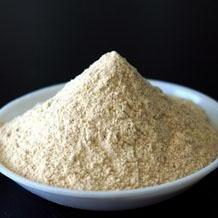
The core of L-leucine separation and purification lies in "first enriching and removing impurities, then achieving precise purification." The mainstream process follows "fermentation broth pretreatment → preliminary separation → refining purification." By leveraging its properties such as isoelectric point (pI≈5.98) and hydrophobicity, a separation efficiency of over 98% purity (up to 99.5% for pharmaceutical grade) can be achieved. Common technologies and optimization schemes are as follows:
I. Pretreatment: Removing Large Quantities of Impurities to Improve Subsequent Separation Efficiency
The core of pretreatment is separating macromolecular impurities (e.g., microbial cells, proteins, colloids) from the fermentation broth to lay the foundation for subsequent purification.
Cell Removal by Centrifugation/Filtration
Adopt high-speed centrifugation (8000–10000 r/min for 20–30 minutes) or plate-and-frame filtration to remove microbial cells. Add 0.1%–0.3% diatomaceous earth as a filter aid to increase filtration rate and reduce L-leucine adsorption loss.
Protein Precipitation for Impurity Removal
Adjust the fermentation broth pH to 3.0–4.0 (away from L-leucine’s pI to avoid target precipitation), heat to 60–70℃, and incubate for 30 minutes to denature and precipitate impurity proteins. Alternatively, add 2%–5% ammonium sulfate for salting out, centrifuge to remove precipitates, and retain L-leucine in the supernatant.
Decolorization Treatment
Add 1%–3% activated carbon to the pretreated supernatant, stir at 50–60℃ and pH 5.0–6.0 for 30–60 minutes to adsorb pigments and some organic impurities. Filter to remove activated carbon, obtaining a clear L-leucine crude extract.
II. Preliminary Separation: Enriching Targets and Reducing Impurity Content
Preliminary enrichment of L-leucine is achieved through physicochemical methods, including isoelectric precipitation, solvent extraction, and membrane separation.
1. Isoelectric Precipitation (Low-Cost Enrichment)
Core Principle: Utilize L-leucine’s lowest solubility near its pI (5.98) to induce precipitation.
Operating Points: Adjust the crude extract pH to 5.8–6.1 (close to pI), stand at 4–10℃ for 12–24 hours to allow L-leucine crystallization. Centrifuge to collect precipitates, wash 2–3 times with a small amount of cold water to remove surface-adsorbed impurities, obtaining crude products (purity: ~60%–70%).
Advantages: Low cost, simple operation, suitable for large-scale preliminary enrichment. Disadvantages: Low purity, requiring subsequent refining.
2. Solvent Extraction (Targeted Impurity Removal)
Core Principle: Leverage L-leucine’s hydrophobicity to form a distribution equilibrium with organic solvents under specific pH conditions, separating polar impurities.
Operating Points: Adjust the crude extract pH to 2.0–3.0 (to make L-leucine positively charged), add an equal volume of extractant (e.g., n-butanol-water system, ethyl acetate), and stir for extraction for 30–60 minutes. After standing for phase separation, collect the organic phase and back-extract with dilute alkali solution (pH 8.0–9.0) to transfer L-leucine to the aqueous phase, achieving preliminary purification (purity: 75%–85%).
Advantages: Targeted removal of polar impurities, high operational efficiency. Disadvantages: Solvent residue must be controlled to avoid product contamination.
3. Membrane Separation (Efficient Fractionation)
Core Principle: Ultrafiltration membranes (molecular weight cut-off: 10–30 kDa) retain macromolecular impurities (e.g., unremoved proteins, colloids), while nanofiltration membranes concentrate L-leucine, realizing simultaneous separation and concentration.
Operating Points: Filter the decolorized crude extract through an ultrafiltration membrane to remove macromolecular impurities. Concentrate the permeate to 1/3–1/2 of its original volume via nanofiltration to increase L-leucine concentration. The concentrate can be directly used for subsequent refining (purity: 80%–85%).
Advantages: Room-temperature operation, no chemical reagent contamination, retains product activity. Disadvantages: High cost of membrane modules, requiring regular cleaning and maintenance.
III. Refining Purification: Enhancing Purity to Target Grade
Crude products after preliminary separation require high-precision refining technologies, including ion exchange chromatography, recrystallization, and chromatographic purification, to meet different application needs.
1. Ion Exchange Chromatography (Mainstream Refining Technology)
Core Principle: Achieve precise separation through electrostatic interactions between L-leucine and resin, a key step to improve purity.
Operating Points:
Resin Selection: Use cation exchange resin (e.g., 732-type strong acid styrene resin), as L-leucine is positively charged at pH<pI and can bind to cation exchange sites on the resin.
Loading and Elution: Adjust the pH of the preliminarily separated L-leucine solution to 4.0–5.0, pump it into an ion exchange column (column height-diameter ratio: 5:1–8:1). Rinse the column bed with deionized water to remove unbound impurities, then perform gradient elution with 0.1–0.3 mol/L ammonia solution. Collect L-leucine elution peaks (monitored by UV detector at 220 nm).
Post-Treatment: Concentrate and crystallize the eluate to obtain L-leucine products with 95%–98% purity.
Advantages: High separation precision, effectively removes isomers (e.g., L-isoleucine) and trace impurities. Disadvantages: Resin regeneration consumes acid and alkali, and the operation process is relatively long.
2. Recrystallization (Purity Fine-Tuning and Morphology Optimization)
Core Principle: Utilize differences in L-leucine solubility in different temperatures and solvents to remove trace impurities and optimize product crystal morphology through crystallization.
Operating Points:
Dissolution: Heat and dissolve the product from ion exchange chromatography with deionized water (60–80℃) to prepare a saturated solution.
Impurity Removal: Add 0.5%–1% activated carbon for re-decolorization, filter to remove impurities.
Crystallization: Slowly cool the clear filtrate to 4–10℃, stand for 12–24 hours to form pure L-leucine crystals.
Drying: Centrifuge to collect crystals, vacuum dry at 60–80℃ for 4–6 hours to obtain refined products with 98%–99.5% purity.
Advantages: Simple operation, low cost, further improves product purity and stability. Disadvantages: Suitable for removing trace impurities, unable to separate structurally similar impurities.
3. High-Performance Liquid Chromatography (HPLC) Purification (High-Purity Requirements)
Core Principle: Achieve precise separation of L-leucine and impurities through hydrophobic interactions of reversed-phase chromatographic columns, suitable for high-purity requirements of pharmaceutical and food grades.
Operating Points: Use a C18 reversed-phase chromatographic column, with mobile phase as methanol-water system (volume ratio: 30:70–50:50), flow rate: 1.0–2.0 mL/min, column temperature: 30–40℃. Inject the crude product solution into the chromatographic column, monitor elution peaks with a UV detector, and collect target peak fractions. After concentration, crystallization, and drying, the product purity can reach over 99.5%.
Advantages: Extremely high separation precision, removes trace isomers and impurities. Disadvantages: High equipment cost, small processing capacity, suitable for small-batch high-purity product preparation.
IV. Technology Combination Schemes for Different Application Scenarios
Large-Scale Industrial Production (Food Grade, 98% Purity): Fermentation broth pretreatment → isoelectric precipitation → ion exchange chromatography → recrystallization. Low cost and high yield, adapting to industrial needs.
Pharmaceutical Grade Production (Over 99.5% Purity): Fermentation broth pretreatment → membrane separation → ion exchange chromatography → HPLC purification → recrystallization. Multi-step refining ensures high purity, meeting pharmaceutical standards.
Laboratory Small-Batch Preparation: Pretreatment → solvent extraction → recrystallization → HPLC purification. Flexible operation, quickly obtaining high-purity products.
V. Key Optimization Points and Precautions
Precise pH Control: The pH of each step must strictly match L-leucine’s properties (e.g., pH 5.8–6.1 for isoelectric precipitation, pH 4.0–5.0 for ion exchange loading) to avoid target loss or incomplete impurity separation.
Temperature Control: Crystallization and precipitation steps should be performed at low temperatures (4–10℃) to reduce L-leucine oxidative degradation. Drying temperature should not exceed 80℃ to prevent product denaturation.
Impurity Monitoring: Real-time monitor product purity at each step via HPLC, adjust process parameters in a timely manner to ensure the final product meets standards.
Environmental Protection Treatment: Wastewater from ion exchange resin regeneration and waste liquid from solvent extraction must be treated before discharge to reduce environmental risks.