-
Tel:15618093168
|
Email:2307176274@qq.com



L-proline, a cyclic imino acid, plays essential physiological roles in living organisms and finds extensive applications in food, pharmaceuticals, and chemical industries. Below is a detailed overview of its physical and chemical properties:
Ⅰ. Physical Properties
1. Appearance and Odor
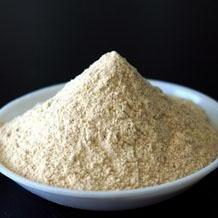
Typically a colorless to white crystalline powder.
Odorless with a slightly sweet taste.
2. Melting and Boiling Points
Melting Point: ~220°C (decomposes during melting).
Boiling Point: ~256°C (decomposes). Strong intermolecular hydrogen bonding from polar groups (amino and carboxyl) elevates both points.
3. Solubility
Water Solubility: Highly soluble in water (162 g/100 mL at 25°C). Hydrogen bonding between amino/carboxyl groups and water molecules drives this solubility.
Alcohol Solubility: Soluble in ethanol, slightly soluble in acetone and diethyl ether. Solubility decreases with reduced solvent polarity (water > ethanol > acetone/ether).
4. Optical Activity
Exhibits optical activity with a specific rotation of +8.6° (c=4, H₂O) due to the chiral asymmetric carbon in its structure.
5. Density
Approx. 1.35 g/cm³, influenced by molecular packing and intermolecular forces.
Ⅱ. Chemical Properties
1. Acid-Base Amphotericity
Contains both amino (-NH₂) and carboxyl (-COOH) groups, making it amphoteric.
Amino group: Accepts protons (basic behavior).
Carboxyl group: Donates protons (acidic behavior).
Isoelectric Point (pI): ~6.30. At this pH, it exists primarily as a zwitterion with minimal solubility.
2. Metal Ion Complexation
Carboxyl and amino groups act as ligands to form complexes with metal ions.
Biological Significance: In metalloenzymes, L-proline may coordinate with metal ions to form catalytic active sites.
Industrial Use: Utilized for metal ion separation and enrichment.
3. Salt Formation
Reacts with acids/bases to form salts:
With HCl: Forms L-proline hydrochloride.
With NaOH: Forms L-proline sodium salt.
Salt solubility varies, influencing applications in pharmaceutical formulations.
4. Peptide Bond Formation
Undergoes dehydration condensation via its carboxyl group with the amino group of another amino acid, forming peptide bonds.
Structural Impact: Its cyclic structure restricts peptide chain rotation, inducing conformational turns in proteins and affecting their tertiary structure and function.
5. Stability
Stable under mild acid/base conditions but may hydrolyze in strong acids/bases.
Prone to decomposition at high temperatures, necessitating controlled storage and usage conditions.
Conclusion
L-proline’s unique cyclic structure and amphoteric nature 赋予 (endow) it with versatile physical and chemical properties, enabling its critical roles in biological systems and diverse industrial applications. From protein structure stabilization to metal ion chelation and salt formation, its characteristics make it indispensable in fields ranging from biochemistry to pharmaceutical development. Proper handling—considering pH, temperature, and solvent compatibility—is essential to leverage its properties effectively while ensuring stability and functionality.