-
Tel:15618093168
|
Email:2307176274@qq.com
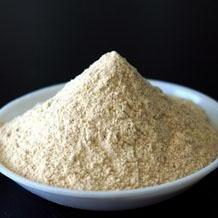
As a bifunctional compound containing amino (-NH₂) and carboxyl (-COOH) groups, L-valine powder in its solid state can participate in various transformations through functional group activity, chiral induction, and structural characteristics in chemical reactions. The following analysis unfolds from reaction types, mechanisms, and application scenarios:
I. Reactions as a Nucleophile
Nucleophilic Reactions of Amino Groups
Acylation: The amino group of L-valine powder undergoes nucleophilic substitution with acyl chlorides, anhydrides, or esters to form N-acyl amino acids (e.g., acetylation with acetyl chloride), commonly used for amino protection or peptide precursor preparation.
Condensation with Aldehydes/Ketones: Amino groups react with aldehydes to form imines (Schiff bases). For example, condensation with benzaldehyde followed by reduction (e.g., NaBH₄) yields chiral amines. If the aldehyde originates from sugars (e.g., glucose), Maillard reactions may occur, generating brown nitrogen-containing polymers.
Michael Addition: Under alkaline conditions, amino groups launch nucleophilic addition to α,β-unsaturated carbonyl compounds (e.g., acrylates), forming β-amino carboxylic acid derivatives for constructing complex amine structures.
Nucleophilic Derivatization of Carboxyl Groups
Esterification: Carboxyl groups react with alcohols under acid catalysis to form amino acid esters (e.g., methyl or ethyl esters), often used for carboxyl protection in peptide synthesis (e.g., Boc-amino acid esters) or improving compound lipophilicity.
Anhydride Formation: Carboxyl groups are converted to mixed or symmetric anhydrides via reagents like triphosgene or DCC, enhancing acylation activity (e.g., for activation steps in peptide condensation).
II. Chiral Induction and Asymmetric Synthesis
As a Chiral Ligand or Catalyst
The chiral carbon (α-carbon) of L-valine powder induces reaction stereoselectivity through coordination. For instance, derivatization into chiral phosphine ligands (e.g., proline-derived ligands) enables metal-catalyzed asymmetric hydrogenation (e.g., asymmetric reduction of α-keto acids to chiral amino acids).
Proline and its derivatives (e.g., L-prolinamide) act as organic small-molecule catalysts in asymmetric Aldol and Mannich reactions, controlling transition state configurations via hydrogen bonding between amino and carbonyl groups to yield single-chirality β-hydroxy aldehydes or β-amino ketones.
Chiral Source Synthesis
Using L-valine as a starting material, various chiral compounds can be synthesized via functional group conversion, such as:
Decarboxylation and reduction of glutamic acid to chiral γ-aminobutyric acid (GABA);
Thiol modification of cysteine to synthesize chiral thioethers or thiazole derivatives.
III. Participation in Condensation and Cyclization Reactions
Fundamental Unit in Peptide Synthesis
In solid-phase peptide synthesis (SPPS), activated L-valine powder (e.g., as active esters) condenses with amino groups on resins via carboxyl groups to extend peptide chains stepwise. Its α-amino group requires protection with Fmoc, Boc, etc., to avoid side reactions.
In liquid-phase condensation, the amino group of one amino acid forms a peptide bond with the carboxyl group of another under condensing agents (e.g., EDC·HCl), with water as a by-product, requiring purification by chromatography or crystallization.
Construction of Heterocyclic Compounds
Oxazoline Ring Formation: Amino acids and aldehydes undergo acid-catalyzed heating to cyclize via amino-carboxyl dehydration, forming 2-oxazolines (e.g., L-alanine reacts with formaldehyde to yield 2-methyloxazoline), usable as polymerization monomers or drug intermediates.
Piperazine Dione By-Products: Excess amino acids in peptide synthesis may undergo intermolecular condensation to form cyclic dipeptides (e.g., diketopiperazines), avoided by controlling concentrations.
IV. Acid-Base Reactions and Coordination
Acid-Base Neutralization and Salt Formation
The amino group of L-valine powder is basic, and the carboxyl group is acidic, forming salts with inorganic acids (e.g., HCl) to yield amino acid hydrochlorides (enhanced water solubility, e.g., glutamic acid hydrochloride for food seasoning) or with bases (e.g., NaOH) for purification (e.g., adjusting pH to isoelectric point for amino acid precipitation).
Metal Coordination Complexes
Amino and carboxyl groups act as bidentate ligands to chelate metal ions (e.g., Cu²⁺, Zn²⁺). For example, zinc ions in zinc gluconate coordinate with amino groups of amino acids to enhance stability. Such complexes are used in metalloenzyme simulation and drug delivery (e.g., cisplatin-amino acid complexes exhibit antitumor activity).
V. Special Reaction Scenarios and Applications
Bioorthogonal Reactions
Chemical modification of L-valine (e.g., introducing azide or alkyne groups) enables participation in click chemistry (e.g., azide-alkyne cycloaddition, CuAAC), applied in protein labeling or drug conjugation (e.g., synthesis of antibody-drug conjugates, ADCs).
Pyrolysis and Degradation Reactions
High-temperature pyrolysis of L-valine powder may cause decarboxylation and deamination, generating amines and CO₂ (e.g., glycine pyrolysis yields methylamine and CO₂) or Strecker degradation to form aldehydes, ammonia, and CO₂—properties involved in flavor formation during food processing (e.g., baking).
As Reaction Media or Additives
Highly polar powders of certain L-valines (e.g., proline) serve as green solvents or catalyst supports to promote organic reactions in aqueous phases (e.g., Diels-Alder reactions), enhancing efficiency via polarity and hydrogen bonding.
VI. Reaction Conditions and Precautions
Solid-State vs. Solution Reactions
For direct solid-phase reactions with L-valine powder, ensure uniform mixing (e.g., grinding with solid reagents). In solution reactions, adjust pH to activate functional groups (e.g., amino groups show stronger nucleophilicity under alkaline conditions, while carboxyl groups favor esterification under acidic conditions).
Chiral Retention
High temperatures or strong acid/base conditions may cause racemization of L-valine (e.g., configuration inversion at the α-carbon). Control temperature and pH, or use chiral protecting groups (e.g., Cbz, Fmoc) to maintain configuration.
Conclusion
L-valine powder, with the bifunctional activity of amino and carboxyl groups, serves as both a fundamental unit for peptide construction and a multifunctional intermediate in asymmetric catalysis, heterocycle construction, and metal coordination in organic synthesis. Its chiral properties make it a key chiral source in drug synthesis, while acid-base and coordination abilities expand applications in materials, catalysis, and biomedicine. Understanding its reaction mechanisms and functional group transformation rules is crucial for designing efficient synthetic routes and developing high-value derivatives.